A kitchen is one of the most important spaces in any home. It is where meals are prepared, conversations happen, children do homework, friends gather and family life unfolds. For many homeowners, the kitchen is much more than a room for cooking, it is the heart of the home.
That is why good kitchen design is about far more than choosing attractive colours, stylish cabinets or the latest appliances. A truly successful kitchen needs to look beautiful, but it also needs to work beautifully. It should reflect the way you live, make everyday tasks easier and create a space that feels comfortable and natural to use.
At Studio Conker, we design bespoke kitchens for homeowners across Bristol, combining thoughtful design with practical functionality to create spaces that are made around the people who use them.
Designing Around How You Live
Every household is different, which means there is no single kitchen layout that works for everyone.
For one family, the kitchen might need to accommodate busy breakfasts, packed lunches and several people preparing food at the same time. For another, it might be primarily a space for entertaining, with generous work surfaces, an island and plenty of room for guests to sit and socialise.
Understanding how a kitchen will actually be used is therefore one of the most important parts of the design process.
Where do you prepare most of your food? Do you need space for baking? How often do you entertain? Do you want somewhere for informal dining? Do children use the kitchen? Would additional storage make everyday life easier?
These questions help shape a kitchen that is not simply designed to look good in photographs, but one that works for real life.
The Importance of Kitchen Layout
One of the biggest differences between an average kitchen and a well-designed kitchen is often the layout.
A beautiful kitchen can quickly become frustrating if the fridge is too far from the main preparation area, there is nowhere convenient to put things down, or several people are constantly getting in each other’s way.
Good design considers how you move through the space.
The position of the sink, hob, oven, refrigerator and preparation areas can have a significant impact on how efficiently a kitchen works. Storage should be positioned where it is most useful, while frequently used appliances and ingredients should be easy to access.
Even relatively small kitchens can feel spacious and practical when the layout has been carefully considered. Conversely, a large kitchen can feel awkward if its space has not been planned effectively.
This is where bespoke design can make such a difference. Rather than trying to fit your lifestyle around a standard kitchen, the kitchen can be designed around you.
Storage That Works for You
Storage is another area where thoughtful design can transform a kitchen.
It is easy to underestimate how much storage a kitchen really needs until you start using it. Pots, pans, crockery, glassware, utensils, food, small appliances and cleaning products all need somewhere to live.
Good kitchen design makes the most of the available space while keeping the things you use regularly within easy reach.
Deep drawers can make pots and pans easier to access, while tall units can make excellent use of vertical space. Cleverly designed cupboards can provide storage in areas that might otherwise be wasted, and integrated appliances can help maintain a clean, streamlined appearance.
The aim is not simply to provide more cupboards. It is to create storage that works intuitively and helps keep the kitchen organised.
Creating a Space for Entertaining
Modern kitchens are increasingly designed as social spaces as well as practical ones.
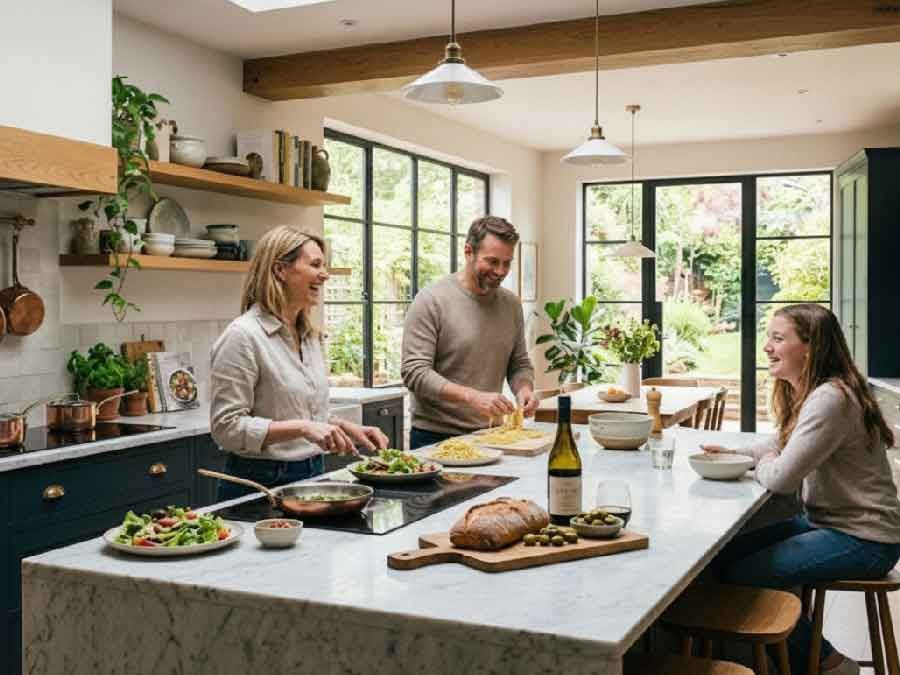
An island or peninsula can provide a natural focal point for the room, offering additional preparation space while also creating somewhere to sit and chat. Open-plan kitchens can connect cooking and dining areas, allowing the person preparing dinner to remain part of the conversation rather than being separated from everyone else.
Lighting also plays an important role. Task lighting needs to provide good visibility for preparation and cooking, while softer ambient lighting can help create a relaxed atmosphere when the kitchen becomes a place to entertain in the evening.
A successful kitchen balances both requirements, allowing the space to adapt throughout the day.
Beauty and Practicality Should Work Together
Choosing finishes, colours, handles, worktops and cabinetry is an exciting part of designing a new kitchen. These details help establish the character of the room and allow homeowners to create a space that feels personal.
However, aesthetics should always work alongside practicality.
A stunning worktop that is difficult to maintain may become a source of frustration. A beautiful open shelf may look wonderful but may not provide the storage you actually need. Similarly, a particular layout might look impressive but could make everyday cooking unnecessarily difficult.
The best kitchen design finds the balance between the two.
Materials and finishes should complement the overall style of your home while also being appropriate for the way the kitchen will be used. The result should feel considered rather than purely decorative — a kitchen that remains beautiful because it works so well.
Making the Most of Your Home
A kitchen renovation is also an opportunity to reconsider how your home uses its available space.
Sometimes the answer is not simply replacing an existing kitchen with a newer version. Removing an unnecessary wall, changing the position of a doorway or rethinking the relationship between the kitchen and dining area can completely transform how a home feels.
Good design looks at the bigger picture.
Natural light, views, circulation, ceiling height and the relationship with adjoining rooms can all influence the final design. A carefully planned kitchen can make a home feel brighter, more spacious and more connected.
This is particularly important when working with existing properties in Bristol, where every home has its own character, proportions and architectural features.
A Kitchen Designed for the Future
A kitchen should also be considered as a long-term investment.
Trends come and go, but good design should continue to work for you years after the renovation is complete. While it is perfectly possible to incorporate current styles and personal touches, the underlying layout, storage and functionality should be designed to stand the test of time.
Think about how your household might change. Could you need more seating in the future? Would additional storage be useful? Is there flexibility to accommodate new appliances or changing needs?
These considerations can help create a kitchen that remains practical and enjoyable for many years.
Your Kitchen, Your Way
Ultimately, good kitchen design is about understanding the people who will use the space.
It is about creating a kitchen where everything has a purpose, movement feels natural, storage is easy to access and the overall environment feels like it belongs in your home. It should support everyday routines while also providing a welcoming space for relaxing and entertaining.
At Studio Conker, we believe a bespoke kitchen should be designed around you — not the other way around. From the initial ideas and layout through to the choice of materials and finishing details, every element can be considered as part of one cohesive design.
If you are considering a kitchen renovation in Bristol, take the time to think about how you really use your kitchen and what you would like to change. The right design can make a remarkable difference to both the way your home looks and the way you live in it.
Planning a kitchen renovation? Studio Conker can help you create a bespoke kitchen that combines thoughtful design, practical functionality and timeless style, all designed around the way you live.